The spine of the Middle Corridor: BTK becomes Azerbaijan’s main transport asset
Over the past several years, global logistics has been undergoing one of its most extensive transformations. Geopolitical crises, disruptions to traditional supply chains, sanctions restrictions, and growing competition between transport routes have forced states and international business to take a fresh look at the map of Eurasia. In these conditions, the Middle Corridor—a transport route connecting China, Central Asia, the South Caucasus, and Europe via the Caspian Sea—has acquired particular significance.
What was perceived just ten years ago as a promising infrastructure project is today becoming one of the key elements of global trade. At the center of this new geoeconomic reality stands Azerbaijan—a state that long before the current changes recognized the strategic potential of its geographic position and managed to turn it into a powerful instrument of national development.
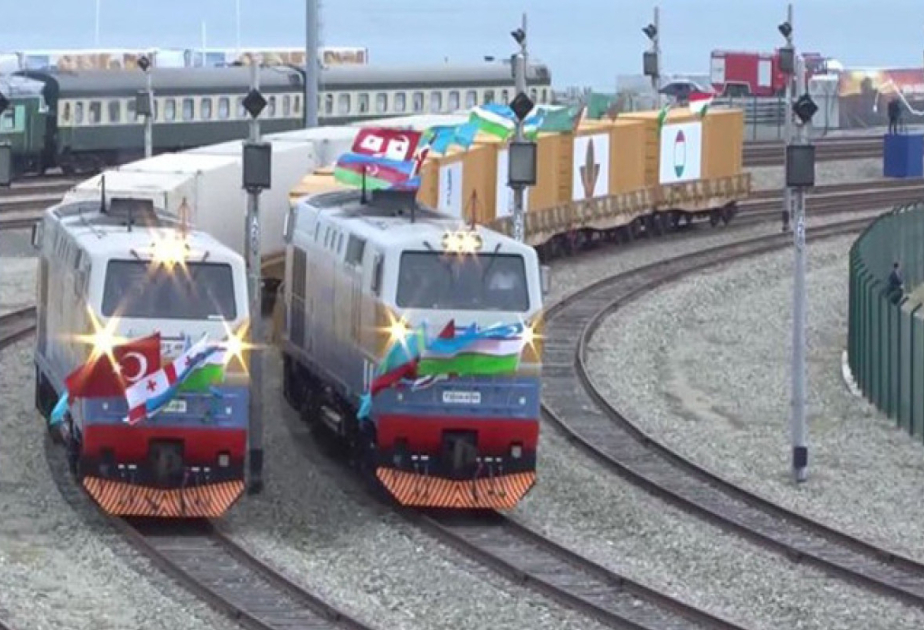
One of the most important elements of this strategy has been the Baku–Tbilisi–Kars railway. Its significance has long transcended the framework of an ordinary transport project. Today, BTK is not only a link between Asia and Europe but also a symbol of Azerbaijan’s new role as one of the key transport and logistics hubs of Eurasia.
The project was called historic from the very beginning of its implementation in 2017. However, at that moment few could have predicted how rapidly global logistics would change and how much demand this route would enjoy several years later. It is important to understand that the launch of BTK was not a one-time infrastructure action. Azerbaijan from the outset viewed the project as a long-term strategic investment in the region’s future. That is why, after the opening of the line, work on its development did not stop.
Particularly indicative is the fact that Baku assumed a significant share of the financial responsibility for the project’s implementation. Construction of the Georgian section of the railway was financed by an Azerbaijani loan of 775 million dollars. Thanks to these funds, one of the most complex stages of construction was completed, making it possible to connect the transport systems of Azerbaijan, Georgia, and Turkey into a single mechanism.
However, the true scale of Azerbaijan’s strategic thinking became evident after the corridor’s launch. Unlike many international infrastructure projects that begin to face investment shortfalls after commissioning, Baku continued to invest in modernizing and expanding BTK’s capabilities.
In 2024, at Azerbaijan’s initiative, a large-scale modernization project began on the 184-kilometer section of the railway passing through Georgia. The project covered five stages of work and effectively became the largest upgrade of the line since its launch.
Thirteen railway stations were modernized, 55 bridges were reconstructed, eight traction substations and more than 320 various buildings and engineering structures were renovated. At the same time, construction of a new railway line more than 30 kilometers long was carried out, along with the reconstruction of more than 153 kilometers of existing infrastructure.
The results of this work have been impressive. Whereas BTK’s throughput capacity previously stood at about one million tons of cargo per year, after the completion of modernization it increased fivefold and reached five million tons annually.
This is not merely a technical indicator. Behind every additional ton of cargo lie new economic opportunities, growth in transit revenues, strengthening of the country’s international positions, and expansion of the transport attractiveness of the entire region.
It is no coincidence that Azerbaijan’s Minister of Digital Development and Transport Rashad Nabiyev stated at the official ceremony marking the opening of the BTK railway that the work carried out was not ordinary repairs but a purposeful and strategic decision taken in order to turn BTK into the true spine of the Middle Corridor.
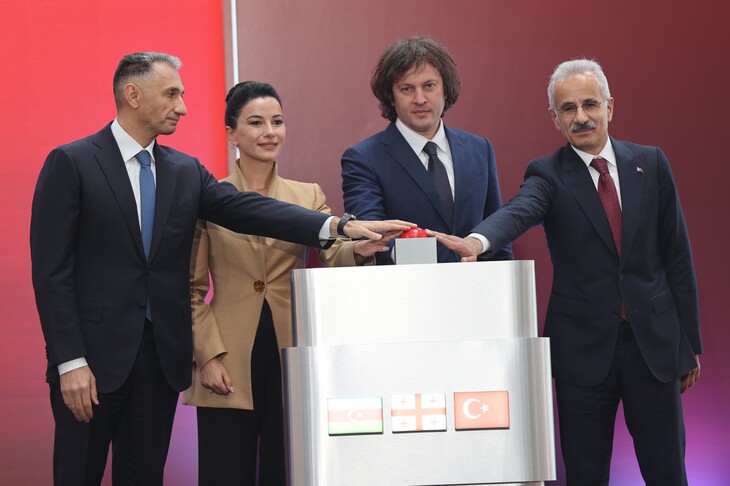
Particular symbolism was attached to the official ceremony commissioning the modernized line in Akhalkalaki. The event was attended by representatives of Azerbaijan, Georgia, and Turkey, as well as heads of the railway administrations and port structures of the three countries. In effect, it confirmed that BTK is entering a new stage of development.
“The Baku–Tbilisi–Kars railway line brings Europe and Asia even closer, enhancing the strategic importance of our region in the global trade and logistics network. With the full commissioning of the route, the throughput capacity of the railway line will reach 5 million tons per year, which will significantly expand the transit opportunities of the region and strengthen the competitiveness of the Middle Corridor,” Georgian Prime Minister Irakli Kobakhidze stated in his speech at the official BTK opening ceremony.
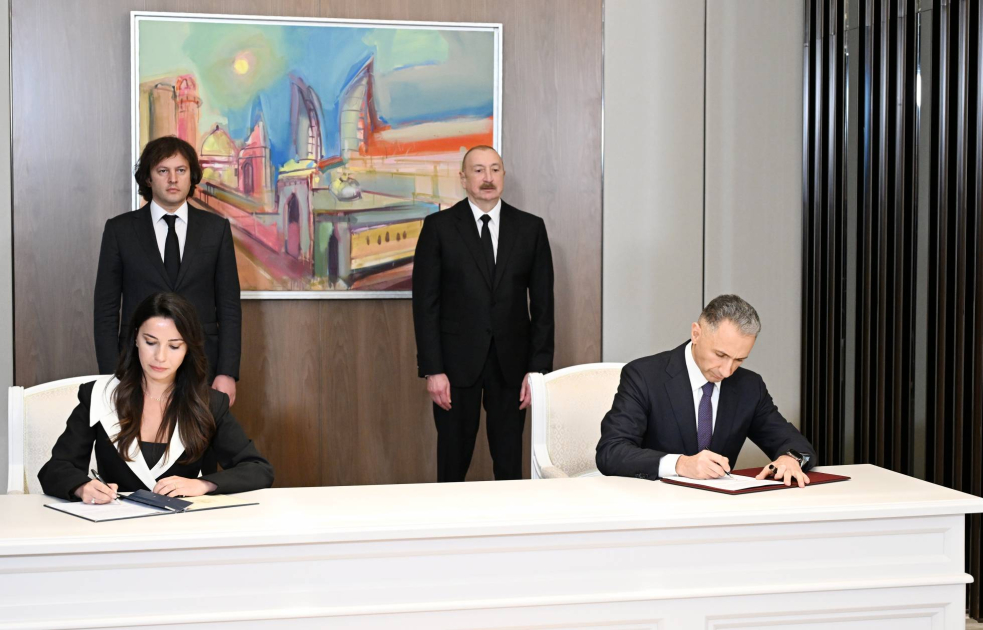
Shortly before this, in Baku in the presence of President of Azerbaijan Ilham Aliyev and Prime Minister of Georgia Irakli Kobakhidze, a protocol was signed confirming the completion of rehabilitation works on the Marabda–Kartsakhi section. This drew a line under one of the largest infrastructure projects of recent years in the South Caucasus.
https://azertag.az/files/galleryphoto/2026/2/1200x630/17791166125285612079_1200x630.jpeg
The significance of BTK becomes especially evident against the backdrop of growing international interest in the Middle Corridor. Today this route is viewed as the most promising alternative to traditional freight routes between China and Europe.
For the countries of Central Asia, the Middle Corridor opens direct access to European markets. For the states of the European Union, it becomes an important tool for diversifying trade routes. For China, it offers an additional opportunity to ensure the sustainability of supplies in the western direction.
In this system, Azerbaijan acts not merely as a transit territory. The country is gradually turning into a key node without which the full functioning of the route becomes impossible.
A special role here is played by the Baku International Sea Trade Port in Alat. It is precisely this port that connects the railway infrastructure of the South Caucasus with the transport system of the Central Asian states via the Caspian Sea.
Today Alat has long ceased to be merely a port. It is becoming a full-fledged multimodal logistics center of international scale. Cargo flows from Kazakhstan, Uzbekistan, Turkmenistan, and China converge here and are then directed along the Baku–Tbilisi–Kars railway toward Turkey and Europe.
An equally important factor is the creation of a free economic zone in Alat. This project makes it possible to combine transport infrastructure with industrial production, logistics services, and investment activity. In essence, Azerbaijan is forming a new economic ecosystem capable of becoming one of the largest centers of business activity in the region.
All of this allows us to say that BTK and the Baku Port must be viewed as parts of a single strategy. Together they form the transport framework of the Middle Corridor and provide Azerbaijan with unique competitive advantages.
At the same time, this is not only about the economy. Modern transport infrastructure inevitably strengthens a state’s political positions as well. The greater a country’s importance for international trade, the greater its influence on regional processes and the greater its partners’ interest in stability and the development of cooperation.
That is why the development of BTK and the Middle Corridor should be regarded as one of Azerbaijan’s most successful foreign-policy and economic projects of recent decades. It strengthens ties between Azerbaijan, Turkey, Georgia, and the countries of Central Asia, promotes expanded cooperation with the European Union, and creates the foundation for long-term growth of the national economy.
Against the backdrop of the ongoing transformation of global logistics, the importance of the Middle Corridor will only grow. The expansion of cargo flows between Asia and Europe, the development of digital transport solutions, the increase in container shipments, and the growing need for reliable routes make this project one of the most promising in Eurasia.
Today it is already obvious that Baku–Tbilisi–Kars has become much more than just a railway. It is the result of Azerbaijan’s strategic vision, an example of successful regional cooperation, and one of the most important instruments for strengthening the country’s national power.
In effect, this is about the creation of a new geoeconomic reality in which Azerbaijan acts not as a peripheral participant in international processes but as one of their architects. And the more actively the Middle Corridor develops, the stronger Azerbaijan’s status becomes as a key transport, economic, and political center of the entire region.
S. Agayeva